Monday, March 24, 2014

All Good Dogs, Aim To Please. All Good Dogs, Bred To Protect.

I recently heard a story out of Moore, Oklahoma where a tornado demolished an entire community.  The county sheriff’s department found a mud-covered dog sitting amidst the rubble. At first it was thought the pooch was just another miracle among all the scattered debris.  But later, rescuers realized the dog was actually guarding the remains of its deceased owner buried under the rubble (Huffington Post, 2013).  This article is an example of how dogs are wired.  They are extremely aware of their immediate surroundings.  Dogs hold strictly to their territory, they are loyal, and they will guard it.


On a Thursday evening in Prescott, Arizona a three year old little girl, Victoria Bensch, was playing outside of her home when she unabatedly wandered into the vast Arizona dessert leading her Queensland Heeler dog “Blue” to look for a ball.  On Friday, the next morning at 09:00 am. A Department of Public Safety helicopter crew observed ground movement in the middle of the dessert.  There they spotted “Blue” circling around the body of the lost child who was lying prone but alive in a creek-bed three quarters of a mile from her home.  The Yavapai County Sheriff’s Office spokesperson, Dwight D’Evelyn credited Victoria Bensch’s survival to Blue.  The family dog who kept the child safe and warm after spending overnight hours in thirty degree temperatures.  Victoria and her dog were returned home and reunited with her mother and father.  The child was then flown to Phoenix Children's Hospital where she was treated for a mild case of frostbite on her feet (The Arizona Republic, 2010).  A dog can be a guardian, a protector, and a playmate; dogs are wonderful companions for children and adults, alike.  When the media reports a dog story like Blue, society responds with applause and takes into serious consideration the priority of keeping these canine companions a bit closer to our side.  The loyalty and intelligence of the Queensland Heeler is well documented and well understood. 

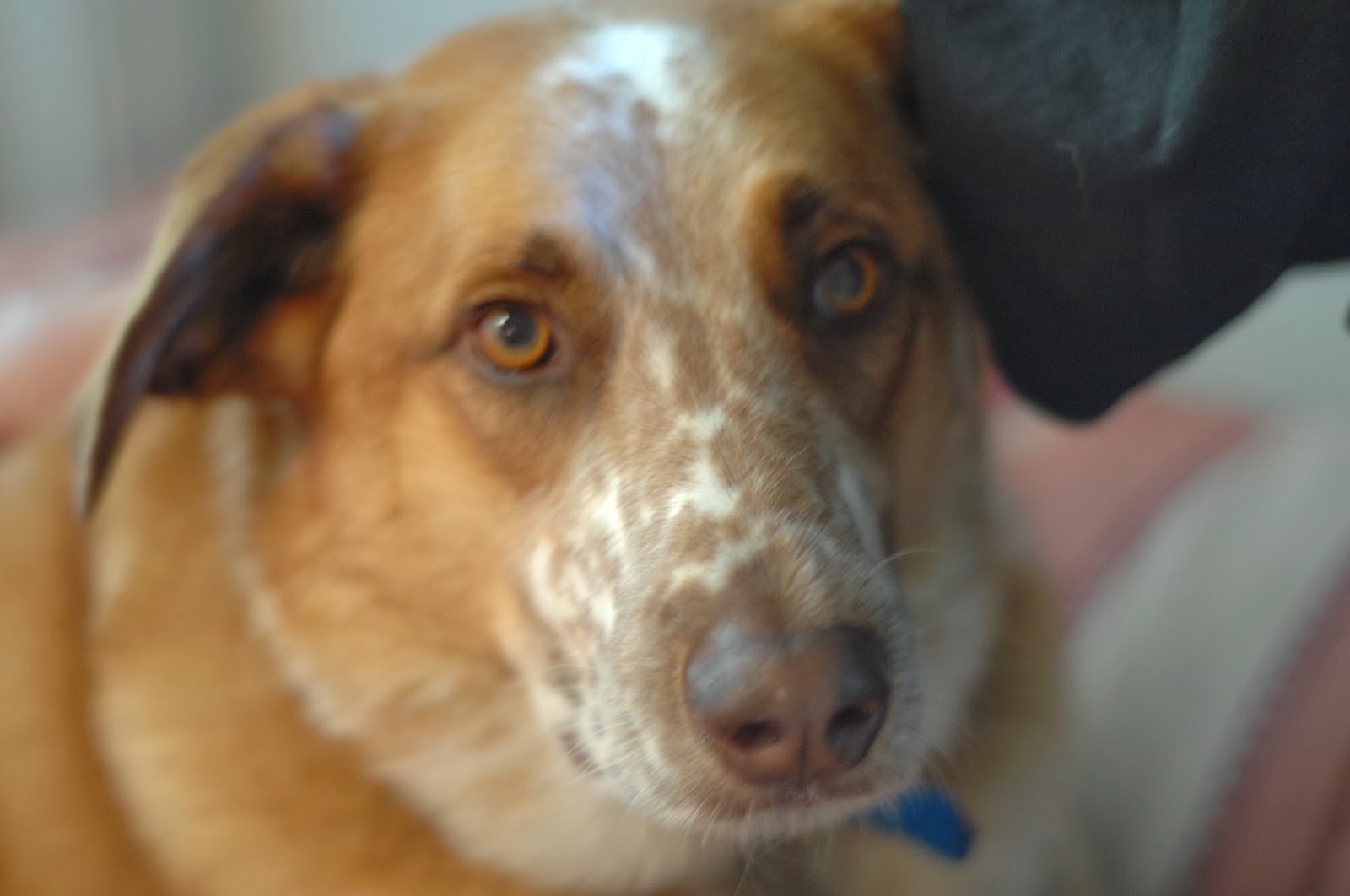
My Queensland Heeler, Joey, for instance aims to please.  He trots alongside my bicycle when I ride and prances at my side when we walk, twice a day for hundreds, if not thousands of miles over the past six years.  I consider this dog inseparable.  Joey is relentless, enduring and extremely loyal.  I believe Victoria Bensch and I would likely agree on the quality of security we enjoy from our Queensland Heeler friends, also known as the Australian Cattle Dog.

Wednesday, March 19, 2014

Get a New Best Friend

Get a New Best Friend

By Jillian Michaels

You don’t have to jettison your old best friend, but studies show that owning a pet can help you lose weight, lower blood pressure, and reduce stress levels. These are not small side effects but rather dramatic ones. For each of these issues, pets may be even better than drugs. (This is probably why I have three dogs, two horses, and a bird.) A study at the University of Buffalo compared two groups of hypertensive New York stockbrokers: one group had no pets, while the other group took in dogs and cats after being pet- less for five years.  Those with pets were found to have lower blood pressure and heart rates than those without.  The researcher seemed to find that the drugs normally used to control and reduce blood pressure weren't quite as effective as animals. (The great part about this story is that many in the pet less group went out and got pets after they heard the results.)

Another study, conducted at the University of Missouri at Columbia, discovered that obese, sedentary individual who walked a dog - their own or one they borrowed - for 20 minutes 4 day a week, lost more weight than those who walked alone. They lost 14 more pounds per person over a one-year period without even dieting.  And one more: researchers at the University of Victoria in British Colombia found that of 351 participants, those who owned dogs walked, on average, 300 minutes per week, while non- dog owners walked only 168 minutes per week.

Okay, this is probably more research than you ever wanted to hear, and I’m sorry to bombard you, but I’m pretty passionate about this one. If you already own a pet – a dog or otherwise – you already know you can’t live without it. If you don’t, consider adopting one. You’ll be saving a life, and it can do miracles for your health, mental state, and waistline.

(Jillian Michaels / Slim For Fit / pg. 183 – 184 / Harmony Books New York / 2013 by EM Publishing, LLC)

Monday, March 10, 2014

...'Howling into the empty air". All Good Dogs remember. All Good Dogs wait.


A Labrador Retriever made its way on to the platform of a local service station one day.  He sat down near the corner of the garage and began howling into the empty air.  Weeks passed as the dog would return every morning until the station owner closed shop in the early evening hours.  The next morning, the dog would return, sit down and wait by that same garage corner and howl.  Occasionally, the station owner fed the animal and placed a bowl of water for the animal to drink.  One evening, the station owner attempted to take the dog home but the animal resisted his prodding to get into the car.  Curiously, the station owner began asking customers about the dog.  The next day a man came forward and claimed to know the owner of the canine.  The man said, “The master of this Labrador frequents your gas station on a regular basis.  Unfortunately, a few weeks ago, he was involved in a very serious car accident and has been unable to locate this dog.”  The stranger offered to return the lost pooch to the owner.  The stranger said, “The dog’s master will soon be released from the hospital and is looking forward to re-uniting with his furry friend.”  The Labrador willingly got into the strangers’ vehicle and was returned back to his owners’ care.  The highlight of this story is to signify how all good dogs remember their master and patiently await his return.
 
“A dog has no use for fancy cars or big homes or designer clothes; a water logged stick will do ‘just fine.  A dog doesn’t care if you’re rich or poor, clever or dull, smart or dumb.  Give him your heart; and he’ll give you his.  How many people can you say that about?  How many people can make you feel rare and pure and special?  How many people can make you feel extraordinary?”
(Marley & Me, 2009)


Tuesday, March 4, 2014

All Good Dogs, Not For All Good People.

When I originally sat down to write All Good Dogs, I had a variety of questions regarding the relationship between dogs and dog owners. Such as, are dogs really intelligent or do we somehow deceive ourselves into believing they are? What makes a good dog a wonderful family addition?  Are these furry, four legged creatures just a lot of hard work and maintenance or is there a genuine quality of life and well-being to support the effects of dog ownership on humans?  Is becoming a volunteer pooper scooper really worth the hassle of added monetary expenses such as: food, county licensing fees, veterinarian bills, immunization shots and proper owner training courses for the dog?  And don’t forget, somebody has to pick-up that poop; the bigger the dog the bigger the scooper!  Also, there is no return on investment for dog owners.  No matter how far or fast your dog runs, or how talented your dog catches the ball while dancing on a skate board on You-Tube, or how shameful they gazes at you after rummaging through your stinky kitchen garbage can.  A dog requires a lot of personal time, attention and financial investment.
My topical theme, the Human Connection to Dogs is based on my sincere belief that all people should own a dog.  How can people live in America and not own a dog?  However, since I have examined the scientific data, reviewed evidence and collected various media reports about dogs and dog ownership relationships, I am compelled to re-think my initial opinion on my initial views regarding ownership.  I realize, I may have projected an unintended burden on to 53.7 percent of non-dog owners in our society who want nothing to do with raising a dog at all.  Second, I have made assumptions that all dog owners will take their ownership responsibilities seriously or share the same level of devotion toward animals in learning how best to care for them, as I strive to do.  Now most dog owners I have met are decent minded, animal loving individuals who believe these creatures are of great personal value; hurting or neglecting these critters would be the furthest thing from their minds.  Our society holds dog owners to a very high standard when caring for these animals in humane and compassionate ways.  I think our society has made great strides in finding good homes for our fur covered friends.
However, research studies have indicated that animal cruelty is on the rise in our country and the Pit Bull breed seems to be the most common victim of this type of crime.  In 2000 -2001 reported abuse against Pit Bulls stood at 13% of overall reported dog-abuse cases.  By 2007, that percentage showed an increase to 25% (Humane Society, 2011).  Also, in 2007, the news media reported a total 1,880 animal cruelty cases, 64.5% or 1,212 reported cases involved the dog species.  In May of 2013, three animal cruelty cases were reported to the Baltimore Animal Rescue and Care Shelter (BARCS) in Maryland.  The first dog, a three year old Pit Bull named, Queenie was found suffering from sores on her body after being starved and confined to a downstairs basement.  Two additional cases were also reported during that same one week period, involving a dog thrown from a car, while another dog in a separate incident was found stabbed (CBS Baltimore, 2013).  These examples are just the beginning of a larger problem because most animal abuse cases go unreported, unrecognized and therefore, unstoppable.  Reports of animal cruelty and neglect are most common in rural and urban areas and are not limited to social economic boundaries (Humane Society, 2011).

Millions of people are bitten by dogs every year; of the 4.7 million victims each year; 386,000 suffer from injuries requiring serious medical attention, while other victims die.  Regarding these human injury claims, insurance companies no longer issue homeowners insurance for clients who own specific types of dog breeds.  The dog breeds to be considered as vicious or high risk of causing injury are as follows: Wolf-mixes, Doberman's, Akita's, Pit Bulls, Chow's and Rottweiler's.
In order for us to clarify this growing problem using statistics, a study was conducted to examine anti-social personality disorders in people who choose to own vicious dog breeds, more specifically: antisocial behaviors and personality disorders or ASPD.  In the study, eight hundred sixty nine college level students were asked to complete an assessment survey where they indicated data such as type dog breed owned, deviant thinking and behaviors, attitudes on animal abuse, callousness, psychopathy, alcohol use, deviant lifestyle behaviors, and personality.  The samples were separated into four comparative dog groups such as, small dog owners (SDO), large dog owners (LDO), controls (C), and vicious dog owners (VDO).  The results of the survey concluded that VDO had significant higher deviant thinking and behaviors, including entitlement, sentimentality, and super-optimism tendencies than other types of dog owners (OTDO).  VDO also sought out higher thrill sensation based behaviors or primary psychopathy.  The study results also suggested that VDO were arrested by local authorities more often and frequently engaged in brawls or physical fights.  VDO utilized significant amounts of marijuana more often than OTDO.  The research set a precedent of a much broader understanding of ASPD; impacting the overall general bias that people who choose to own vicious dogs might be a slippery slope indicator of ASPD for individuals in our society (Ragatz L, et. al. 2009), (Schenk AM, et. al. 2012).  However, I still think that society in general benefits from the presence of dogs in every neighborhood.  But I do not believe everyone in society should necessarily own one.
Here is a wise quote from the movie, Marley and Me, “A dog has no use for fancy cars or big homes or designer clothes; a water logged stick will do ‘just fine.  A dog doesn’t care if you’re rich or poor, clever or dull, smart or dumb.  Give him your heart; and he’ll give you his.  How many people can you say that about?  How many people can make you feel rare and pure and special?  How many people can make you feel extraordinary?” (Marley & Me, 2009)
 In conclusion, I believe dog ownership is a wonderful gift and humans who discover that connection with the right dog are very fortunate.  Personally, I have found great joy in raising my two pups, Joey & Hapa.  These two Aussies have traveled with me across the country from the Grand Canyon in Arizona to Steam Boat Springs, Colorado on two separate camping trips.  They have herded sea gulls during off-leash walks along the shores of the California coastline from Chrissie Field in the San Francisco Bay south to Monterey and Carmel by the Sea.  My dogs have driven with me across the great Mississippi River and endured a sudden tropical rain flood while passing through Sallisaw, Oklahoma approaching Little Rock, Arkansas.  Today, I simply enjoy our daily walks and bicycle rides around Boyd Lake, Colorado.  The human connection to dogs is a lifelong road trip of growing old and spending memorable times together.  These furry critters can be good friends.

Sunday, February 23, 2014

The Human Connection To Dogs

By examining the social psychological  interactions between humans and dogs; we discover our energy driven connection to be extremely complex and even mysterious; for it entails mutual cooperation between two participating species.  In the first study, The Human Attachment to Dogs (2009), we will consider comparative cognitive studies of visual cognitive ability (VCA) and social cognitive ability (SCA) between humans and dogs.  In the second study, the Psychological Effects of Dog Ownership, by the researcher, Krista Marie Clark Cline (2010) utilizes statistical data on individuals who are actively engaged in dog ownership.  We will examine correlations between individual wellness such as; stress, depression, physical activity and exercise with daily stress factors of multi-tasking, exposing evidence of burdensome psychological effects of dog ownership on people.  We will also clarify questions of how dog ownership impacts the individual versus an existing family system in today’s active and highly complex human society.
According to the first study, Attachment between Humans and Dogs, by Nagasawa, et al. (2009), over twenty different species of animals have been successfully domesticated since pre-historic times.  Archaeologists have evidence which implies the dog is one of the most pre-historic mammal species to develop the capacity to inherently function within human society in comparison to other pre-historic animal species such as wolves and apes.  The most common purpose of why dog ownership is so widely accepted are mainly for hunting, guarding and herding (Coppinger- Schnieder 1995).  However, human-dog interaction was more closely examined by Boris Levinson (1962) when he documented a clinical case study where a child with communication problems tremendously benefited from his companionship with a dog.

In society, dogs have established themselves a niche as mans’ best friend.  This role ascribes a standard for which we set the dog species apart from other animal species on the planet.  Dogs seem to possess an intelligence to understand and respond to human finger pointing and basic hand gestures on command.  This unique behavior is associated only to dogs, especially the working breeds.  Researchers refer to this capacity as visual cognitive ability (VCA). The theory implies that dogs developed VCA during their domestication period (Hare, et al., 2002), (Miklosi et al., 2003).  Examining the human-canine connection denotes a canine capacity for engaging in humanlike VCA similar to how man’s visual attention can be directed or lead (Call, et al., 2003, Miklosi, et al., 2000).  Also, the study demonstrates how dogs will not receive food from persons’ whose face is blindfolded or covered over with a bag (Gasci, et al., 2004; Viranyi, et al., 2004), (Viranyi, et al., 2006) suggesting dogs can only know what they can see (canine olfactory and auditory sensory abilities were not considered in this study).  Researchers also indicate a cognitive mental process and an action directed response linking a specific dog to a specific human being (Ludwig et al., 1994), (Kikusui et al., 2006), (Adachi, et al., 2007).  This fascinating phenomenon of dogs utilizing the gaze to commune is indicative of a higher social cognitive ability (SCA) as well, which is most essential when understanding the social psychological cooperation necessary between man and beast (Baron-Cohen, et al., 1997), (Driver et al., 1999), (Macrae, et al.,2002), (Morton-Johnson, 1991).


In the second study, the Psychological Effects of Dog Ownership, the researcher, Krista Marie Clark Cline (2010) utilizes statistical data from individual dog owners engaged in multiple roles, such as physical activity, marital status, age and gender.  The basis for this study is to make the argument that dog ownership can either increase or decrease depression depending on circumstances in which individuals or families own a dog.  The three methods for this study included participants, procedures and measures. The first method utilized random phone participation where a national telephone survey, known as random digital dialing (RDD) was used (Ham & Epping 2006).  The survey included 200 questions on various topics such as; health and medical, social topics, and the environment.  A total of 201 adults between the ages of 19 to 94 years responded with interviews lasting 45 to 60 minutes long.  The procedure used ordinary least squares (OLS) regression which is a two-step analysis  considering the main effects of dog ownership, including social support and physical activity.  The second step, regression examined the effects of moderating variables like, marital status, age and sex.  This study compiled information to create terms of interaction for ownership by sex, age and marital status; then acquired dependent variable statistics (DVS), such as depression, marital status and physical activity (Ross, et al. 1984).  The research also included independent, mediating, and moderating variables to integrate owner support roles such as; friends and family (1- 4), physical exercise (0 - 5), age by (years), male owner (0) or female owner (1), married (1) Single (0) which included widowed, divorced, separated or never married.  Current employment (1), unemployed (0) and children under 18 years of age living at home (1), no children (0) were added variables researchers considered in measuring role strain for adults.  And finally, the control variables for race and education where used to measure socioeconomic status (SES) such as, race (white - 1) used as a binary variable.  Education was measured from (1 - 7), less than ninth grade (1), graduate / professional degree (7).

In conclusion, the study revealed single individuals and women more suitable for dog ownership than men.  The study denoted well-being beneficial to single persons more so than for married couples due to primary relationship roles versus an enhanced lifestyle change where physical activities were priority.  The study also found women who own dogs suffer less from depression than men, because I know statistically speaking, women are treated for depression more often than men which clarify theories on gender differences among personal relationships (Riseman 1998).  But dog ownership does play an effective role on depression regardless of social support from friends and family or physical activity and exercise.  Generally, dog ownership has positive effects on the individuals overall health and wellness (Ory, et al., 1983; Lawton, et al., 1984).  Employment, married couples, single individuals and children living at home were added conditions when examining variables in the research.  In conclusion, the study regarded seasonal timing essential when assuming dog ownership status.  In addition, personal well-being and depression reduction were factored in for individuals and families when considering added stress factors and dog ownership.  According to statistics, dog ownership is currently at 46.3 percent for families who own at least one dog (APPMA, 2011-2012).  This number is up more than 7 percent from 2006 which is an all-time high.


Thursday, February 20, 2014

A Good Dogs Favorite Websites

Posted from Diigo. The rest of my favorite links are here.

My Diggs On Dogs

Today, I looked at dog blogs from other blogging authors as myself. To my pleasant surprise, I found great content on dogs everywhere. Content I share with you is only a minuet tip of a very big iceberg on the canine species. Below, I have linked this information from my RSS Feed.  Enjoy!

Click here:  My Diggs on Dogs


Respectfully,
Mr. Dwaine Jugoz


I welcome any fruitful thoughts you may have on this topic.


Tuesday, February 18, 2014

How Good Dogs Go To Heaven

PetlifeRadio.com – It’s A Doggy Dog World
Liz Palika, Petra Burke & Kate Abott


Click here:  The End of Our Dogs Lives

The How Book of Dogs
Liz Palika

This week I took an opportunity to listen to a podcast about "The End Days of Our Dogs Lives" while surfing through Itunes.  The podcast is sponsored by Petlife Radio.com “It’s a Doggy Dog World” by Liz Palika.  Everything a dog owner would need to know about caring for their dog is available on this radio podcast program.  Personally, I found this show entertaining, personal, transparent, and serious.  The host; Liz Palika is a wealth of knowledge & experience about dogs.  Also, I liked her stories regarding dogs and found her program to be real, honest, and filled with true life humor.

What is your doggy philosophy on life?  Have ever thought about the day your loving dog or pet grows old and may need to be euthanized?  Real life altering questions we all must consider at some point in their short future.  What is euthanasia?  Some folks believe dogs should die naturally, regardless of how much they suffer.  Personally, I am not one who believes this.  Questions you may have about your dog's life or death issue may be:

o   Is your dog having more bad days than good days?
o   Is the quality of life for your pet getting better or worse?
o   How uncomfortable or unhappy are they?
o   Is the joy of being a dog and the job they perform, now a burden?
o   Is the dog in pain (medicated)?

Liz, along with her two guests; Petra Burke & Kate Abott told us a story about her Velcro Dog unable to follow her from room to room when she conducted simple house chores around her home; “I can’t follow you into the next room like I used to do; I'm so sorry?"

Therefore, a decision to euthanize a family pet member is always difficult.  It is a decision that should be discussed with your spouse, and other family members, because the sudden absence of a family member will likely have traumatizing psychological and emotional effects on other personalities who live in your home, including the cat.  Everyone should have a chance to say, “Good-bye!”  Also, Liz encourages folks to consider veterinarian policies when putting down a family pet.  Some vets allow family members to be present for the procedure, others do not.  In either case, grieving the death of a dog or cat is real, regardless if it is sudden or a long process.  As I have always believed, our dogs are wonderful gifts and their lives with us are just on lease.  

If it be possible, one can plan ahead by understanding the best options for how your dog should be put to sleep may be a very good way to dealing with one’s ultimate grief.  Liz also talks about weighing options before settling on the decision to euthanize.  Her best advice on the subject is to gain knowledge by understanding your process on dealing with loss by help others in their grieving processes, as well.  The panel suggested collecting artifacts such as paw impressions, the dog’s collar, identification tags, photos, videos, and even fur while they are with you as a way of preserving their memories which are helpful in preparing us during times of our grieving.  How do you deal with your grief?

The 5 Stages of Grief
o   Denial
o   Anger
o   Bargaining
o   Depression
o   Acceptance

Lastly, it is important to choose whom you talk with about death of a family pet.  Not everyone will understand what you are going through.  Liz Palika encourages folks to call grief counselors at:

University of Davis Pet Loss Hospital
o   1 (800) 565-1526
o   1 (530) 752-3602

Cornell University Pet Hotline
o   1 (607) 253-3932
What are your thoughts on the topic?
The End of Our Dogs Lives

Thursday, February 13, 2014

'Best Friends

The media portrays intimacy between humans and dogs in an over exaggerated, yet humorous kind of way; magnifying the quirks in a human-dog relationship that can be studiously perceived as unhealthy, yet undeniably funny.  On season four of the television sitcom Reba, the character Barbra Jean creates a video story documenting her intimate, yet eccentric relationship with her Toy Dog, Brock.  The producers for this episode use lyrics from the TV show, The Courtship of Eddies Father, “Best Friends” (Harry Nilsson 1960) as music for her video.  Barbra Jean eccentrically entertains her dog by playing her flute for it, reading a bedtime story to it, and even consuming a hot dog with it.  She paints the pooches’ paw nails and dresses the furry little creature in pastel colored doggy outfits (Reba Show, 2005).   I think this video strikes a serious chord with many dog owners in our society who might share these same eccentricities of being as much a “goof-ball
” like this Reba Show character; Barbra Jean.  But after reviewing the satire of Barbra Jean with her toy dog, I think society believes dog owners can be emotionally unstable.  The video confirms negative perceptions about dog owners who allow personal pets to dominate them, especially the dog.  This bias perpetuates ideas that dog owners are confused and compensatory, lacking real people friends.  I often find myself struggling to maintain a good sense of balance about life with my dogs through humor.

Now let’s examine the scientific perspective of social psychological interactions between human beings and dogs; this energy driven connection is complex and mysterious in that it entails mutual cooperation between two participating species.  In the first study, The Human Attachment to Dogs (2009), we will consider comparative cognitive studies of visual cognitive ability (VCA) and social cognitive ability (SCA) between humans and dogs.  In the second study, the Psychological Effects of Dog Ownership, by the researcher, Krista Marie Clark Cline (2010) utilizes statistical data on individuals who are actively engaged in dog ownership.  We will examine correlations between individual wellness such as; stress, depression, physical activity and exercise with daily stress factors of multi-tasking, exposing evidence of burdensome psychological effects of dog ownership on people.  I will also clarify questions of how dog ownership impacts the individual versus an existing family system in today’s highly active and complex human society.

Tuesday, February 11, 2014

If You Love Your Dog...


In the movie Marley & Me, an unfortunate event occurred during a nine week prenatal check-up when Jennifer Grogan discovers her anticipated baby is stillborn.  In grieving the loss for her unborn child, Marley the family dog senses something is painfully wrong.  He goes to Jennifer’s side and rests his muzzle on her lap in a consoling gesture of sadness and compassion (Marley & Me, 2009).  This quite drama and emotionally driven scene is a somber reminder of how dogs and humans interact; a dog expressing empathy for his brokenhearted master in a meaningfully sincere, yet unspoken kind of way.  Although dogs may not always understand, they can sense when people are sad.
My dogs and I walk twice a day, for at least a half hour because we need the exercise and because they require my personal time and attention.  The walk is an act of intimacy in dog psychology.  These times are simple, yet profound; it is routine, yet necessary.  The walk is an appropriate time for me to maintain the standards I uphold as a pack-leader.  The walk is a time when my voice is heard, my commands are expressed and nothing less than an obedient canine response is appropriately accepted.  The walk affirms our pack identity and our values.
 Cesar Milan, a guru dog trainer, teaches dog owners the technique of dog psychology with an emphasis on pack-leadership.  His goal is teaching the dog owner how to achieve balance and harmony between owner and dog.  One of Caesars’ famous quotes include; “If you love your dog; walk your dog” (Cesar’s Way, 2007).  My Queensland Heeler and my Australian Shepherd are bred to herd livestock and work the ranch.  They exude levels of high energy that cannot be ignored or subdued.  When they are neglected, they bark with a healthy sense of attitude until pack leader responsibilities are fulfilled.  My dogs know the difference between routine exercise and a good playtime activity.  They are happiest when their needs are satisfied.


welcome any thoughts you may have regarding dog ownership.


Friday, February 7, 2014

Dog Ownership Is A Wonderful Gift


I once heard an interesting story of how a dog was found sitting on the front porch of its master’s new home after being lost for an extended period of time.  As the owner of two Australian pups, this phenomenon simply fascinates me.  Because my dogs are as dear to me as my own human children, if I were to lose either of these relationships my heart would long for their homeward bound return.  Therefore, my purpose will be to explore this deep connection human beings can share with dogs.  This social psychological bond between our two species is like understanding a mystery to the universe - that is, our innate need for unconditional love and faithful companionship.
I believe dog ownership is a wonderful gift and people who discover the right connection with the right dog are very fortunate people.  Personally, I have found great joy in raising my two pups, Joey & Hapa. These two Aussies have traveled with me across the country from the Grand Canyon in Arizona to Steam Boat Springs, Colorado on two separate camping trips.  They have herded sea gulls during off-leash walks along the shores of the California coastline from Chrissie Field in the San Francisco Bay south to Monterey and Carmel by the Sea.  Our dogs have driven with us across the great Mississippi River and have endured sudden tropical rain floods while passing through Sallisaw, Oklahoma approaching Little Rock, Arkansas. Today, we simply enjoy our daily walks and bicycle rides around Boyd Lake, Colorado. This unconditional love and connection for the dog species is a lifelong road trip of growing old and creating memorable times together. These furry little critters are more than just dogs, they truly are good friends.

When a dog is adopted into a human family it becomes a very intricate part of that distinct family system. The following dialog is between two brothers conversing about Marley, the family dog, from the movie; Marley & Me.  Marley is growing old and ill, but as usual he waits to greet his young friends at the local bus stop as he has done over a period of many, many years. Marley hears the approaching school bus and runs to greet his two buddies as they return home from a very long day at school. “Is he there?” “Of course he’s there, he’s always there.” “How does he know we’re coming?” “Ah, I don’t know, he just knows. Dogs know things like that.” “All dogs?”  “All good dogs.”  “Oh, there he is!  There’s Marley!” As they step off the bus and onto the sidewalk, “Hi Marley, how are you?” “I missed you.”  (Marley & Me, 2009)

I have always thought God’s purpose for creating dogs is to satisfy man’s basic need for companionship. I also believe dogs can reduce stress and relieve emotional pain. Dogs play significant roles in the homes of millions of families today. This may be a reason for why we allow dogs such prominence in our lives.  However, the relationship tends to induce a value bias which often is misunderstood by society.  Therefore, it is my intention to explore a few inspiring dog stories to appreciate the profound sense of gratitude I personally have for these animals. I also happen to think that the human-dog connection is rich, powerful, and unique. 

I welcome any thoughts you may have regarding dog ownership.